



Most shoppers have used a loyalty program, even if they never thought about it: a coffee app that gives a free drink, a beauty store with member tiers, a shop that sends "You have $5 waiting" before a birthday. Fewer store owners know what actually happens inside one, and why it works.
This article explains it simply: what a loyalty program is, the main types, how one feels from the customer's side, and what well-known brands do. If you already know you want one for your Shopify store, go straight to how to set up a Shopify loyalty program.
What is a loyalty program?
A loyalty program is a system that rewards customers for repeat purchases and other actions that help your store. It runs in a simple loop:
- Earn. Customers get points or perks for buying, creating an account, leaving a review, following you or referring a friend.
- Redeem. They swap points for something they value: money off, free shipping, store credit or a free product.
- Return. Using a reward means another order, and a balance they haven't spent yet is a reason to come back.
The difference from a discount is timing. A discount is handed out before the purchase to anyone who sees it. A loyalty reward is earned after the purchase, and only by customers who come back.
The difference is subtle, but it shapes how customers see your brand. Constant sales make a store look cheap and teach shoppers that only people who don't wait pay full price. A reward that has to be earned does the opposite: it gives customers a reason to value your store and to stay with it.
Types of loyalty programs
Most programs mix two or three of these:
- Points programs. Customers earn points per dollar spent and per action, then redeem them for rewards. The most common type, and the easiest to start with.
- Tiered (VIP) programs. Customers move up levels, like Silver and Gold, as they spend more. Higher tiers earn faster or get extra perks.
- Cashback and store credit. Customers get a share of what they spend back as credit for the next order. Simple to understand: "5% back on everything".
- Referral programs. Customers get a reward when a friend they invite makes a first purchase, and the friend usually gets a discount too.
- Paid programs. Customers pay a fee for ongoing benefits, like free shipping or a yearly reward. These work best for big retailers with frequent buyers.
What a loyalty program looks like to your customers
Definitions only go so far. Let's follow one customer, Mia, through a typical online store's loyalty program and see it from her side of the screen.
Meet Mia
Mia is a regular at your online pet store. She discovered your brand a few months ago, when her dog Biscuit chewed through yet another toy. She bought a rope toy that actually lasted, and came back for training treats a few weeks later. She's the kind of customer every store owner dreams about: she likes your products, she doesn't need much convincing, and she's already shown she'll buy again.
But nothing strengthens that relationship between purchases. She has no reason to visit your store unless she needs something, and no sign that you've noticed her loyalty. She's a great customer, but the connection is passive. When another brand's ad offers her 15% off her first order, nothing pulls her back to you. A loyalty program changes that.
The screenshots below come from our demo store, where you can try the same program yourself. The link logs you in as a demo customer automatically.
Mia discovers your loyalty program
It's a Tuesday evening. Mia logs into her account on your store to check on her last order. She's not thinking about loyalty. She just wants to know when Biscuit's treats are arriving.
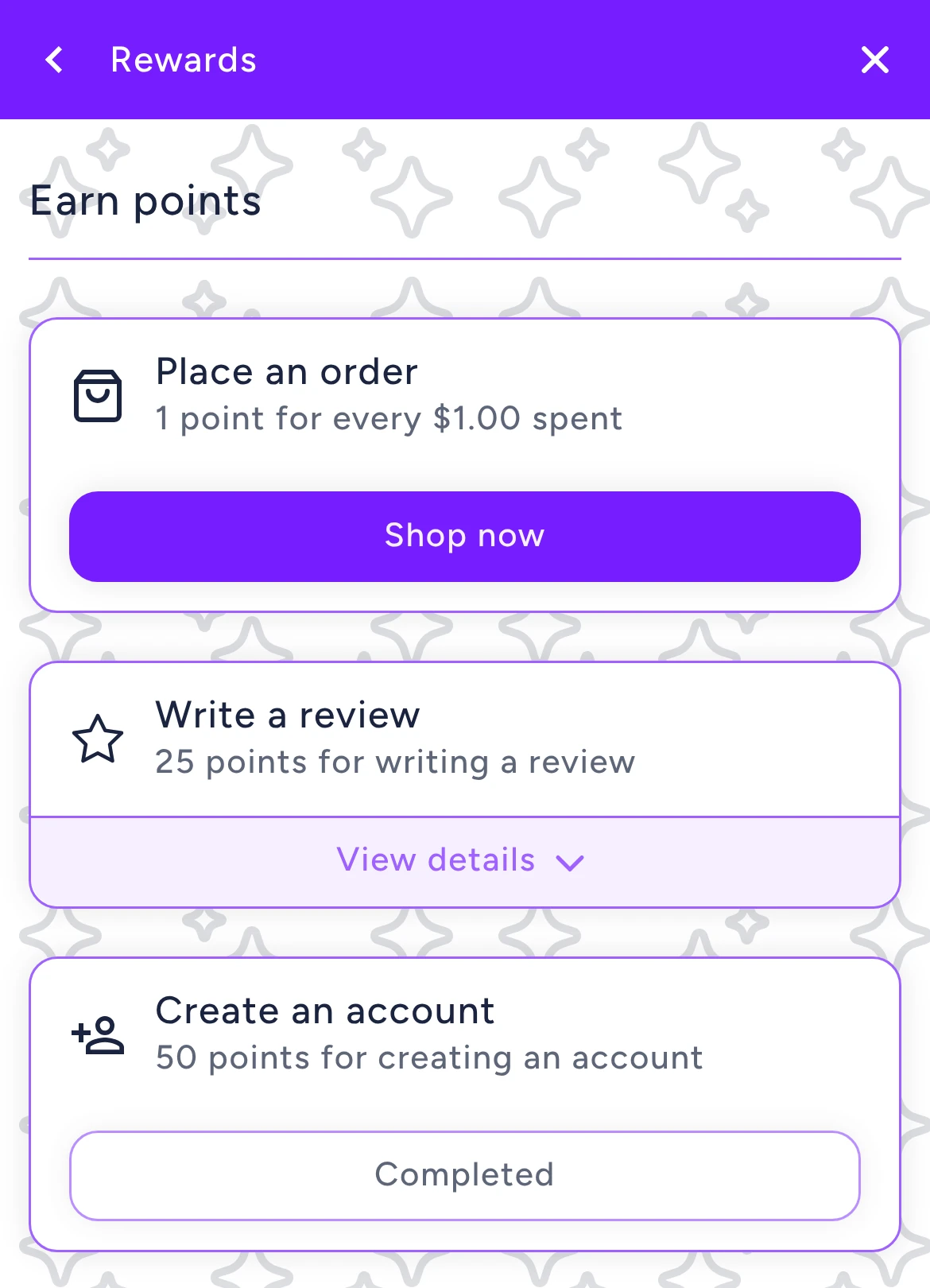
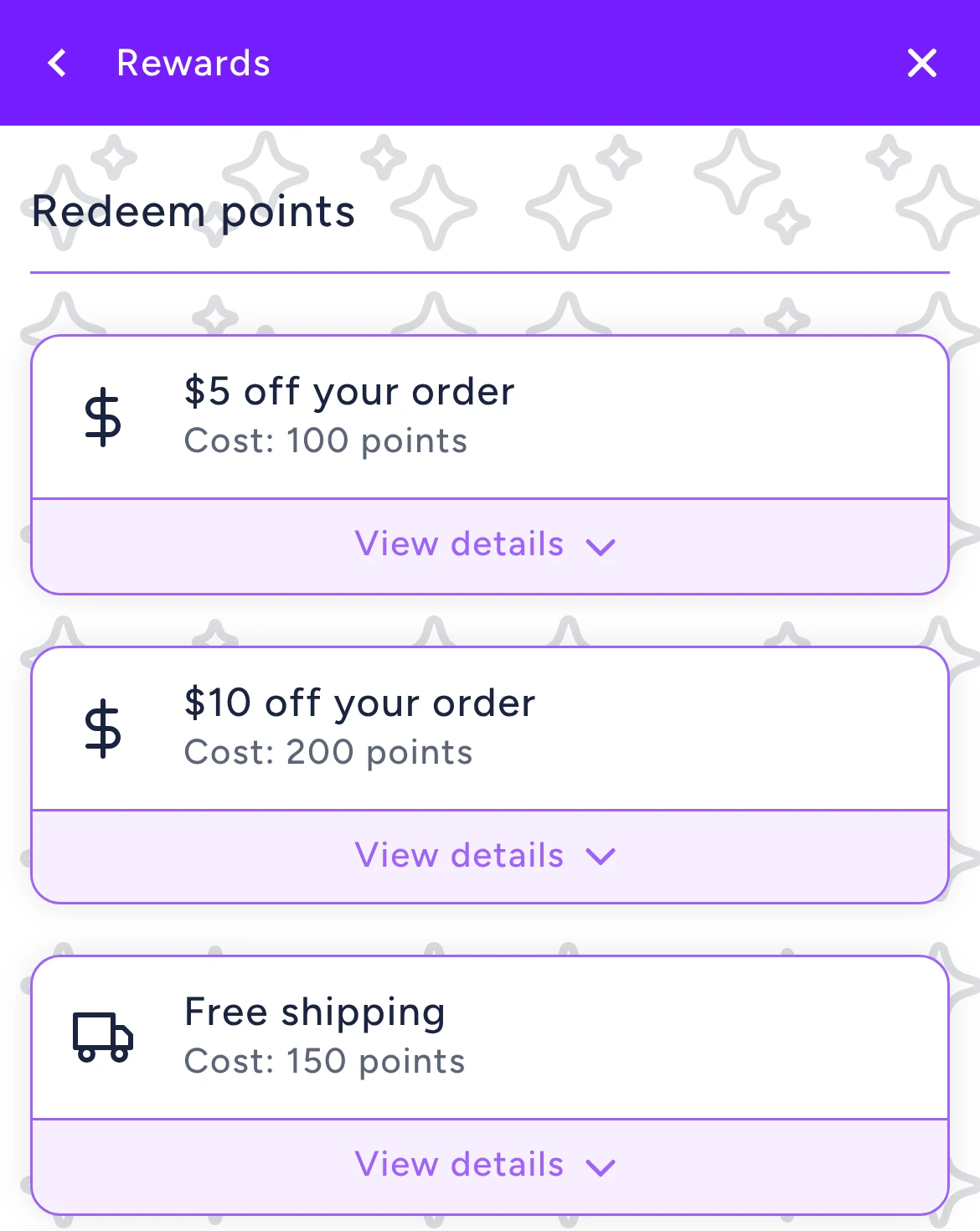
Then something catches her eye: a new Rewards tab on her account page. She clicks it and sees a simple overview. She can earn points for things she was going to do anyway, like placing orders and leaving reviews, and spend them on $5 off, $10 off or free shipping.
Mia didn't go looking for a loyalty program. It found her, right where she already was. That's one of the most underrated parts of a good setup: no separate app, no special page to find. The program lives in the customer account, next to her orders and addresses.

Mia earns her first points
Mia already has some points. Her earlier orders earned them automatically: no code to enter, nothing to opt into. Each order gave her 1 point per $1 spent.
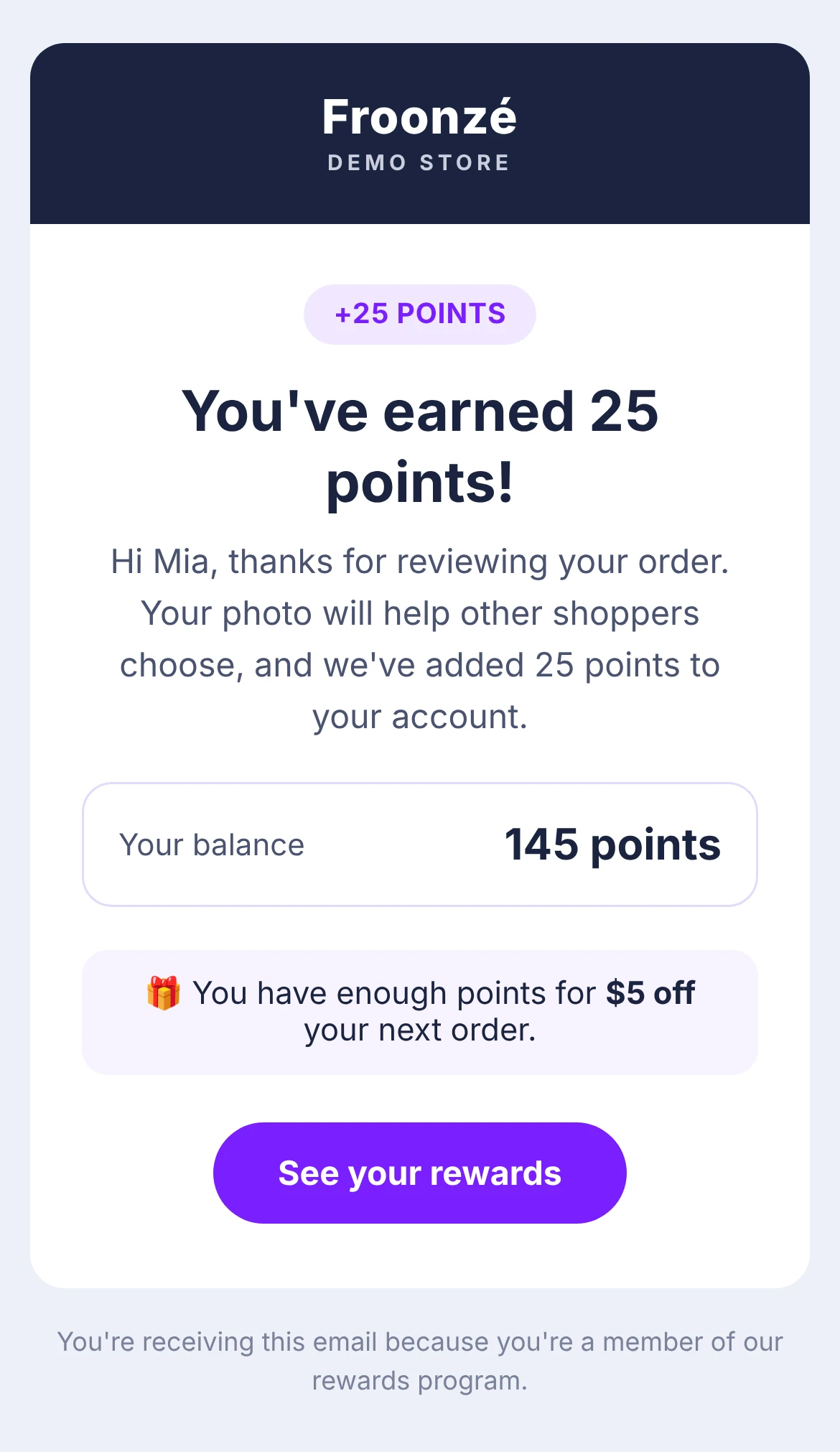
She also sees that a product review earns 25 points. Biscuit hasn't let go of that rope toy since it arrived, so she writes a few sentences about how well it holds up and adds a photo of him with it. A few minutes later, an email arrives: "You've earned 25 points!"
That email does something subtle. It's not a promotion. It's news about something Mia owns, so she opens it, and it gives her a reason to check her balance next time she visits. For the store, it's a reminder that you exist, sent without a single marketing email.
Mia redeems her first reward
A few weeks later, the treats are running low again. While she's on your store, she spots an orthopedic dog bed that Biscuit would love, but it feels like a splurge. She adds it to her wishlist and buys only the treats, a chew toy and a new harness.
Once the order is fulfilled, her balance updates: 210 points. She opens the rewards and scrolls through what's available:
- 100 points: $5 off
- 200 points: $10 off
- 150 points: free shipping
She's past 200. She redeems $10 off, goes back to her wishlist and finally orders the dog bed. What felt like a splurge a few days ago now feels like a treat she earned.
This is the moment that matters. The program didn't pressure Mia into spending more. It gave her a reason to come back for something she already wanted. Her earlier orders earned the reward, and the reward removed the hesitation on the next one.
It's also cheaper than it looks. Mia's $10 reward came after about $185 in orders, so it works out to roughly 5% back, and only a returning customer gets it. A 15% off sale gives a bigger discount to everyone, including customers who would have paid full price anyway. It also tells every shopper that your regular prices aren't the real ones. A reward Mia earned tells her something else: that your store values her.
Mia tells a friend
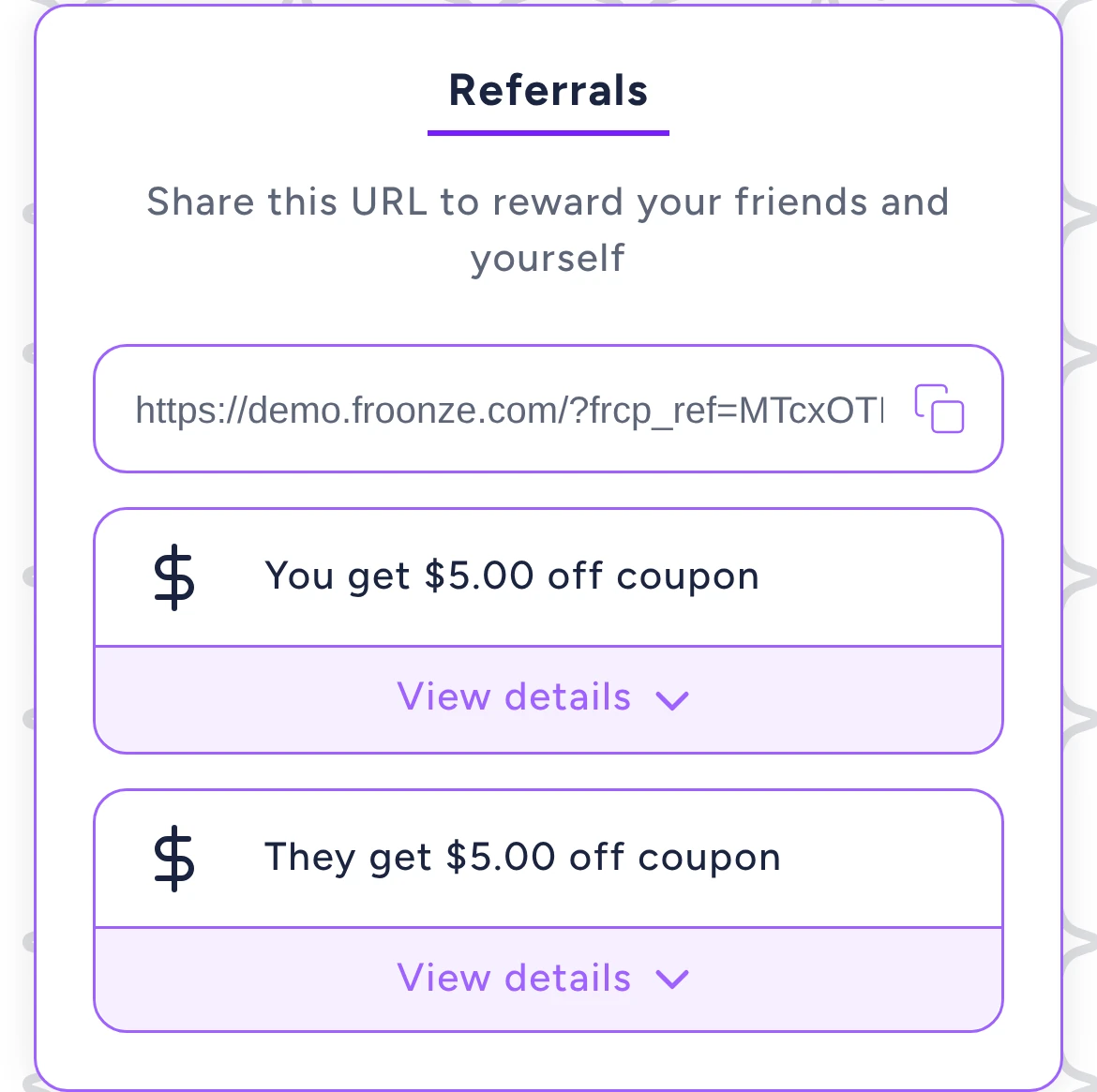
At the dog park, Mia's friend Lily asks where Biscuit got the toy he won't let go of. Mia tells her about your store and remembers the referral option on her rewards page.
She opens her account on her phone, copies her referral link and sends it to Lily. The deal is simple: Lily gets $5 off her first order, and Mia gets $5 off too when Lily buys.
Lily orders the same rope toy for her dog that evening. You've just won a new customer without spending anything on ads, and she arrives with a recommendation from someone she trusts. That's how loyalty programs grow a store: your happiest customers become your best marketing channel.
Mia levels up
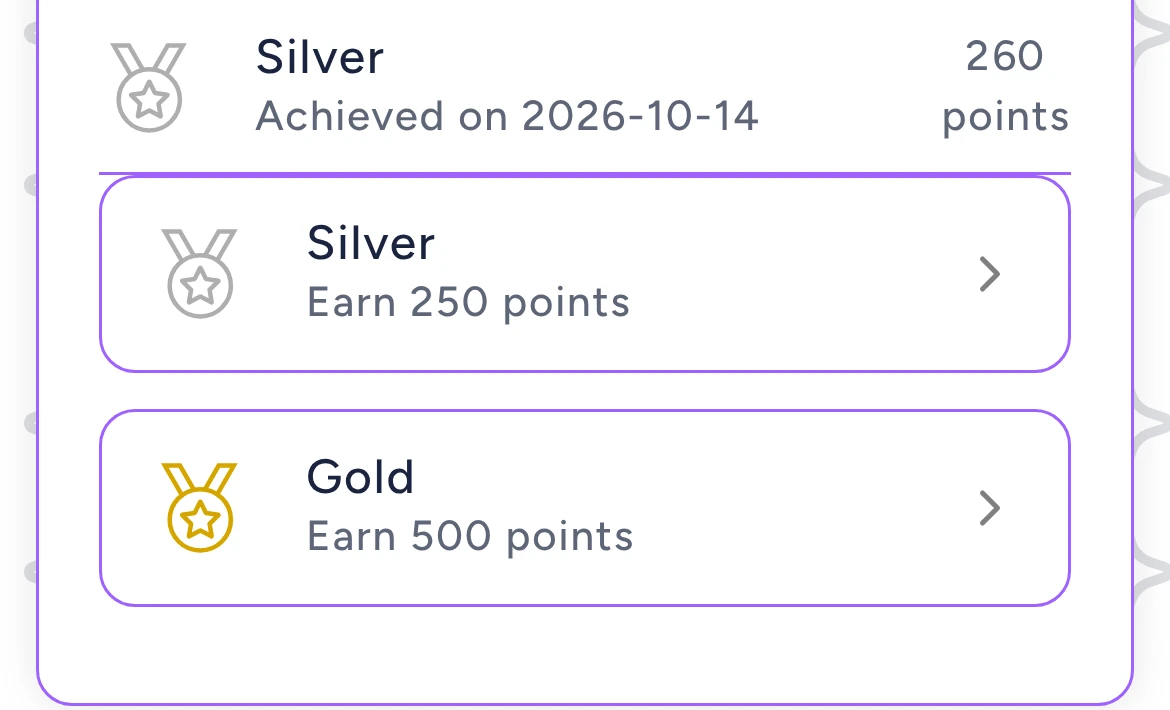
The dog bed order pushes Mia past 250 points earned, and she gets an email she wasn't expecting: she's reached the Silver tier.
Her perks change. She now earns 1.5 points per $1 instead of 1, so every order is worth 50% more to her than before. Gold, with 2 points per $1, is next. Tiers don't last forever, though: if Mia stops ordering for a year, she drops back down.
VIP tiers add something a flat points program can't: status. Mia spent months and a few hundred dollars getting to Silver. She can see Gold above her and knows what it takes to get there. Nobody asked her to, but she's now thinking about how to reach it.
That status changes how she sees other stores. A month later, a big pet chain emails her 20% off her first order. A year ago, she might have tried it. Now it's one discount on one order, against better rewards on every order she places with you, and a tier she would lose if she stopped ordering from you for a year. The 20% email goes straight to the archive.
This is why VIP tiers are one of the strongest parts of a loyalty program. The longer a customer stays, the more she has to lose by leaving, and a competitor's discount can't buy that back.
Mia gets a reminder
Then life gets busy. Months go by without an order, and Mia forgets about her points. One morning an email arrives: "Your points expire in 7 days. You have enough for $5 off."
Biscuit's treats actually ran out last week. Mia has been meaning to reorder, but it keeps slipping her mind. The email is the nudge she needed: she orders that afternoon and uses her $5 off.
This is where automated emails earn their keep. Mia didn't need a sale or a newsletter to come back. She needed a reminder about something she already owned and was about to lose. Loyal customers often don't leave for a competitor. They simply forget about you. The store caught Mia before she drifted away, and the email went out without anyone lifting a finger.
Mia's birthday
On her birthday, another email: "Happy birthday, Mia! Here are 100 points." She added her birthday when she joined the program and forgot about it, so it's a nice surprise.
She has been eyeing a winter coat for Biscuit for a while. With her birthday points and the $5 coupon from Lily's order, she finally gets it.
Why Mia doesn't shop around anymore
A few weeks later, a friend adopts a puppy, and Mia wants to bring a welcome gift. She doesn't have enough points for a reward this time.
A year ago, she would have compared a few stores or just ordered from Amazon. Now she doesn't bother. Her points are here, her tier is here, and every order moves her forward. So she buys it, at full price.
That's the quiet power of a loyalty program. Mia was already a good customer. The program made her loyalty visible to her and to you, and gave her a reason to keep choosing your store over the next one in her search results.
What Mia's year was worth to the store
Here's Mia's year added up. The prices are an example, but the pattern is typical for a pet store.
| Order | Price | Rewards used | Mia paid |
|---|---|---|---|
| Rope toy and a ball | $45 | $45 | |
| Training treats and a leash | $75 | $75 | |
| Treats, chew toy and harness | $65 | $65 | |
| Dog bed from her wishlist | $60 | $10 off (200 points) | $50 |
| Treats after the expiry email | $58 | $5 off (100 points) | $53 |
| Winter coat on her birthday | $70 | $5 off (birthday points) + $5 referral coupon | $60 |
| Puppy gift for a friend | $40 | $40 | |
| Lily's first order (referral) | $48 | $5 off | $43 |
| Total | $461 | $30 in rewards | $431 |
The store gave away $30, about 6.5% of what the two customers spent. In return it got eight orders, a photo review that helps sell the rope toy to everyone else, and a new customer it didn't pay an ad platform for. Mia, meanwhile, never once felt like she was being sold to.
Loyalty program examples from well-known brands
Big brands run the same building blocks Mia saw, at a larger scale. Here's what five of them do, and what a smaller store can borrow.
1. Sephora Beauty Insider: tiers by yearly spend
Beauty Insider is free to join. Members earn points on purchases and move up tiers by yearly spend: VIB from $350 and Rouge from $1,000. Higher tiers get bigger discounts during Sephora's sales events and more exclusive perks.
What to borrow: tiers based on yearly spend give your best customers something to keep earning, and the thresholds are easy to understand.
2. Starbucks Rewards: earn in the app, tiers on top
Customers earn Stars per dollar and spend them on free drinks and food. In March 2026, Starbucks added three tiers: Green, Gold (500 Stars in 12 months) and Reserve (2,500 Stars). Higher tiers earn faster, and their Stars don't expire.
What to borrow: rewards customers can reach quickly keep them coming back. Even a small first reward works if it arrives soon.
3. Nordstrom: points that turn into store credit
The Nordy Club is free to join. Members earn 1 point per $1, and every 1,000 points turn into a $10 Note, a reward they spend like store credit on their next purchase. Members move up through three tiers: Influencer, Ambassador and Icon.
What to borrow: a reward that works like money in the customer's account feels more valuable than a coupon code, and it doesn't cheapen a premium brand. On Shopify, you can pay rewards as native store credit that applies at checkout automatically.
4. Amazon Prime: a paid program built on convenience
Prime members pay a subscription for fast free shipping, streaming and member-only deals. Once customers pay for it, they tend to shop where they already get the benefits.
What to borrow: rewards don't have to be discounts. Free shipping is one of the most valued rewards for an online store.
5. Mia's store: a small pet store on Shopify
The program Mia used isn't a big-brand program. It's what a Shopify store can run with a loyalty app: points per dollar, points for reviews and birthdays, rewards from 100 points, a referral offer, two VIP tiers and automated emails. Most of it takes an afternoon to set up.
What to borrow: all of it. The step-by-step setup guide uses the same earning rules, VIP tiers and referral offer as Mia's store.
Why loyalty programs work for online stores
- More repeat orders. A balance customers haven't spent is a reason to come back, and a reward close to reach removes the hesitation.
- Fewer discounts. Rewards go only to customers who return, so you keep your everyday prices.
- More reviews, and better ones. Points for reviews, especially with photos or videos, give shoppers the proof that helps them buy.
- New customers through referrals. Friends of happy customers arrive with trust already built.
- A reason to stay in touch. Automated emails about points and rewards keep your store in mind between orders, and customers open them because they're about something they own.
How to start a loyalty program on your Shopify store
Shopify doesn't have a built-in loyalty program, so you add one with an app. You choose how customers earn points, which rewards they can get, and where the program shows up on your store. Our guide on how to set up a Shopify loyalty program walks through it in 10 steps, with the reward math that keeps it from eating your margin.